
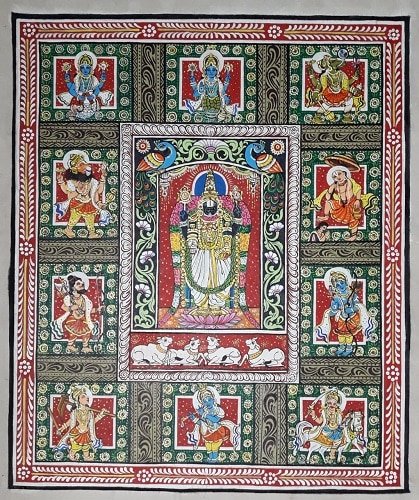

Description
The term “Kalamkari” is said to have come from two Tamil words, “Kalam”, which means pen, and “Kari”, which means craftsmanship. Kalamkari Painting became popular under the patronage of the Golconda sultanate. Kalamkari is the Oriental word for the Indian village of Kalamkari where this type of hand-painted or block-printed textile was originally produced. Now, Kalamkari paintings are also made in Isfahan (Iran), Andhra (India), and Telangana (India). Only natural dyes are used in Kalamkari, which involves 23 steps. There are two distinctive styles of Kalamkari art in India – the Srikalahasti style and the Machilipatnam style. To create Kalamkari, the cloth is first steeped in a mix of buffalo milk and astringents. This is then dried under sunlight. Afterward, the colors for red, black, brown, and purple are outlined with a mordant before being placed on the cloth.


Reviews
There are no reviews yet.