

Description
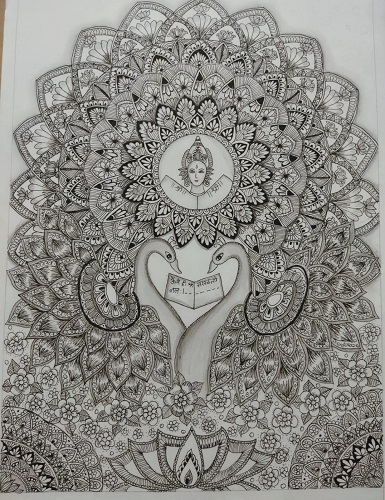
Mandala is a Sanskrit word that can translate to “circle” or “discoid object.” These geometric designs have deep symbolic meaning in Hindu & Buddhist cultures. Mandalas are representations of various aspects of our universe which are used as instruments of meditation. They are also symbols of prayer, most notably in the East Asian countries, China, Japan, and Tibet. Around 560 BC, Gautama became increasingly aware of human suffering and left his kingdom in order to attain enlightenment through meditation and thoughtful action. Buddha preached his philosophy across parts of India and established the first sangha, a Buddhist community of monks. According to legend, Buddha began preaching his philosophy across parts of India, where he attracted followers and eventually established the first Buddhist community of monks. We first learn about mandalas through the travels of Buddhist monks who shared practical, moral pursuits with others. Through them, it spread to other Asian regions including Tibet, China, and Japan by the 4th century. The use of mandalas in Buddhist, Hindu, and various other religions is documented. Some painters of the spiritual craft were pious individuals who were commissioned for their work by a patron. They worked seated on the floor with a painting propped on their lap or in front of their crossed legs.




Reviews
There are no reviews yet.