

Description
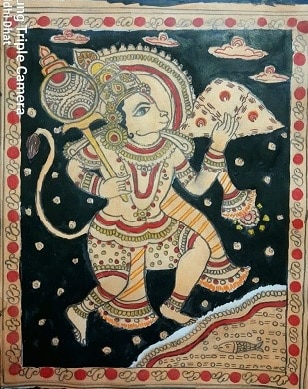
The term “Kalamkari” is said to have come from two Tamil words, “Kalam”, which means pen, and “Kari”, which means craftsmanship. Kalamkari Painting became popular under the patronage of the Golconda sultanate. Kalamkari is the Oriental word for the Indian village of Kalamkari where this type of hand-painted or block-printed textile was originally produced. Now, Kalamkari paintings are also made in Isfahan (Iran), Andhra (India), and Telangana (India). Only natural dyes are used in Kalamkari, which involves 23 steps. There are two distinctive styles of Kalamkari art in India – the Srikalahasti style and the Machilipatnam style.To create Kalamkari, the cloth is first steeped in a mix of buffalo milk and astringents. This is then dried under sunlight. Afterwards, the colors for red, black, brown and purple are outlined with a mordant before being placed on the clothTo dye a blue part of a cloth the next step is to cover other parts in wax and then immerse it in indigo dye. After the cloth is out of the indigo, scrape off the parts covered by wax and paint on any other areas needed. This time-consuming process is similar to Indonesian batikTo create contours for a design, artists use a pen which they created by attaching fine hair to the pointed end of bamboo or date palm. This is then soaked in a mixture of jaggery and water.


Reviews
There are no reviews yet.